00 / Levra Automation

Custom automation that gets finished and maintained.

An engineering-first automation partner helping manufacturing facilities leverage custom automation without needing a massive internal team.

Start a conversation

Levra designs, builds, and commissions custom cells, stations, and retrofits. One team carries each project end-to-end — mechanical, controls, and HMI — so the machine your operators run is the machine your engineer designed.

Based in Northern Nevada
Travel for the right project
01 / Machines

A rotary disk stamper, built end-to-end.

Mechanical design, controls, HMI, and commissioning — one team, one source of accountability. Above: a recent build running on our shop floor.

See the project
A1 / How we work

Two ways to start. One path to a running cell.

Choose the entry point that fits where you are. Once a project is approved, both paths move into the same delivery process.

Path A

You know what you want built

Send the specs
Your 2-step entry path
  1. 1

    Share specs

    Send the machine concept, throughput goals, layout, and photos or video of the work area.

    Free
  2. 2

    Fixed-bid proposal

    We return a scoped proposal covering mechanical design, controls, HMI, timeline, and price.

    Free, no obligation
Path B

You don’t know where to start

Book a factory walk
Your 3-step entry path
  1. 1

    Factory walk

    We spend a week on your floor, talk to operators, document processes, and surface the bottlenecks.

    $15k flat
  2. 2

    Automation roadmap

    You receive a prioritized list of automation opportunities with estimated impact and ROI.

    Included with the walk
  3. 3

    Project proposal

    For each opportunity you approve, we return a fixed-bid proposal.

    Free per opportunity
Once a project is approved

Both paths converge here.

One team. One delivery process.

  1. 1. Design & build

    Mechanical, controls, and HMI developed as one integrated system.

  2. 2. Factory acceptance test

    The cell is tested against cycle time, quality, uptime, and safety criteria before shipment.

  3. 3. Install & site acceptance

    We install, commission, and validate the system on your floor.

  4. 4. Handover & support

    Documentation, training, backups, and optional support for improvements.

From first conversation to running cell — we make automation simple.

Pneumatic brick Power brick Controls brick Motion brick
02 / Controls Bricks

Hardware patterns that travel between projects.

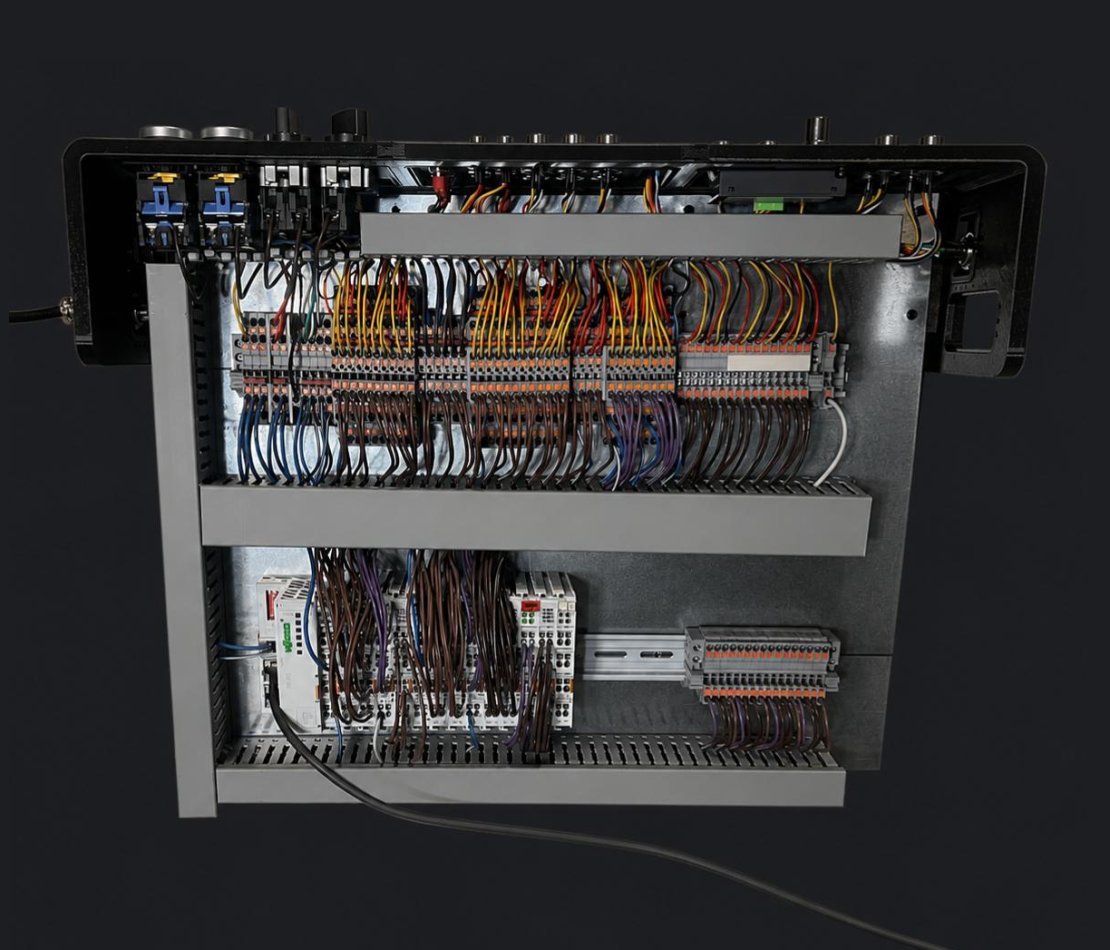
Controls, motion, pneumatic, and power bricks we re-use across builds. Faster prototyping, predictable wiring, panels that aren’t afraid to be opened.

How we use bricks
A2 / Why modular controls bricks

Develop on the bench. Ship in a custom panel.

The bricks let us mock up a cell on the bench quickly and iterate on it. Swap the Wago 750-352 in the controls brick for a different remote I/O or CODESYS PLC without rebuilding the panel. If a project uses motor drives, chain the motion brick after the controls brick. The power brick supplies 24V and 48V DC with an integrated E-stop and reset, fed by an extension cable.

Your machine doesn’t ship with the bench rack — it ships in a custom industrial panel using only the components your build actually needs, laid out efficiently for that machine. Same proven parts, packaged for production.

  • Faster proof-of-concept. Mock up the cell on a bench in days, not weeks.
  • Predictable BOMs. Re-used parts mean fewer surprises in procurement.
  • Maintainable panels. Standard layouts an outside electrician can read.
Explore the modular bricks
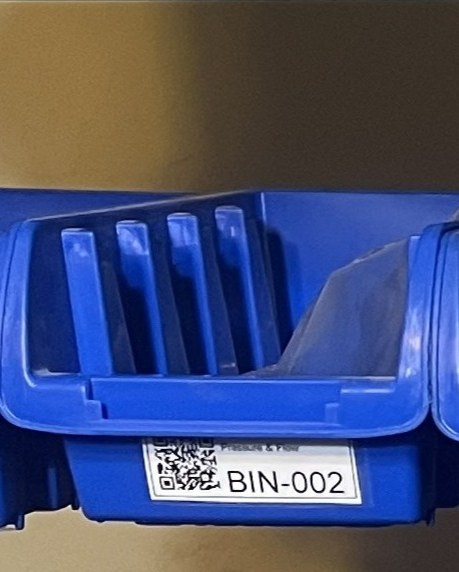
Inventory bin 001 Inventory bin 002 Inventory bin 003 Inventory bin 004 Inventory bin 005 Inventory bin 006 Inventory bin 007 Inventory bin 008
03 / Inventory

An organized shop, not a stockpile.

Every component scanned, indexed, and tied to a project. Pick lists and build instructions generated per build. Fewer surprises at assembly, fewer calls about backorders.

How pick lists work
A3 / Parts discipline

Builds start with a complete kit.

Every project pulls its BOM into a labeled kit on the bench before assembly begins. When a customer changes a spec mid-build, we know exactly which parts are affected and what the cost delta is. Faster builds, cleaner change orders, fewer phone calls about backorders.

  • Indexed components. Searchable database covers every connector, valve, cylinder, and fastener.
  • Per-project pick lists. Allocation is visible before the build starts — not after a stall.
  • Show-on-diagram build instructions. Mount, wire, and plumb each device with a live diagram view pointing to the exact connection.
  • Discipline that scales. Works for one machine. Works for several in parallel.
See the inventory workflow
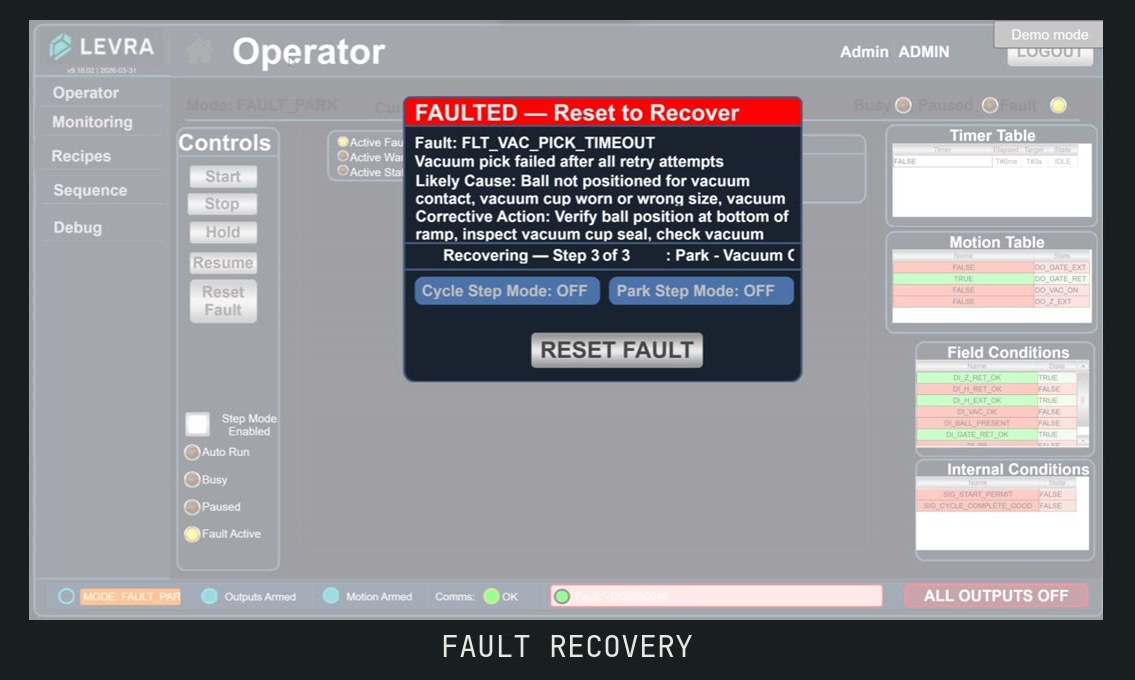
Login screen Auto mode screen Job tracking screen Fault recovery screen Diagnostics screen Manual control screen
04 / Codesys Template

A reusable controls foundation under every build.

Login, operator control, job tracking, fault recovery, diagnostics, and manual override all ship as a CODESYS template — the same proven shell on every machine. Machine-specific code plugs in instead of being written from scratch, so we ship faster and operators see a consistent experience across cells.

See the operator experience
A4 / Where we fit and why

Engineering-first, operator-centered, documentation as a deliverable.

Where we tend to add the most value

  • 50–300 employee manufacturers. Plants without a large in-house automation team.
  • Cells where operators are the bottleneck. Manual handling, counting, or inspection slowing down good equipment.
  • Existing machines that need help around them. Better handling, counting, or staging upstream/downstream of equipment you already run.
  • Teams that own their equipment. Care about documentation, training, and maintaining the cell long-term.

What you get with Levra

  • Full-stack solo integrator. One owner for mechanical, controls, HMI, and commissioning.
  • Proof before big spend. Benches and paid discovery so you see the approach on your parts before signing a build.
  • Operator-centered HMIs. Interfaces and safety built around the people who run the cell every shift.
  • Documentation as a deliverable. Prints, I/O maps, backups, and checklists tied to acceptance — not bolted on later.

The modular bricks and the CODESYS template are the two pieces of the platform that already exist today — the foundation that lets us iterate faster on each new build. Read about how the platform compounds →

Next step

Walk through a process together.

Share a line, cell, or station that isn’t where you want it. We’ll map the current state, outline options, and be realistic about where automation will and won’t pay off.

Start a conversation See recent builds